
Industries / Aerospace and Defense Expo Services
Aerospace and Defense Expo Services
Navigate the complexities of exhibiting at aerospace and defense trade shows in the Dallas-Fort Worth area by leveraging precise planning strategies tailored to major venues like the Kay Bailey Hutchison Convention Center Dallas, Dallas Market Hall, and Fashion Industry Gallery, ensuring smooth coordination of booth setups, logistics, and operational requirements.
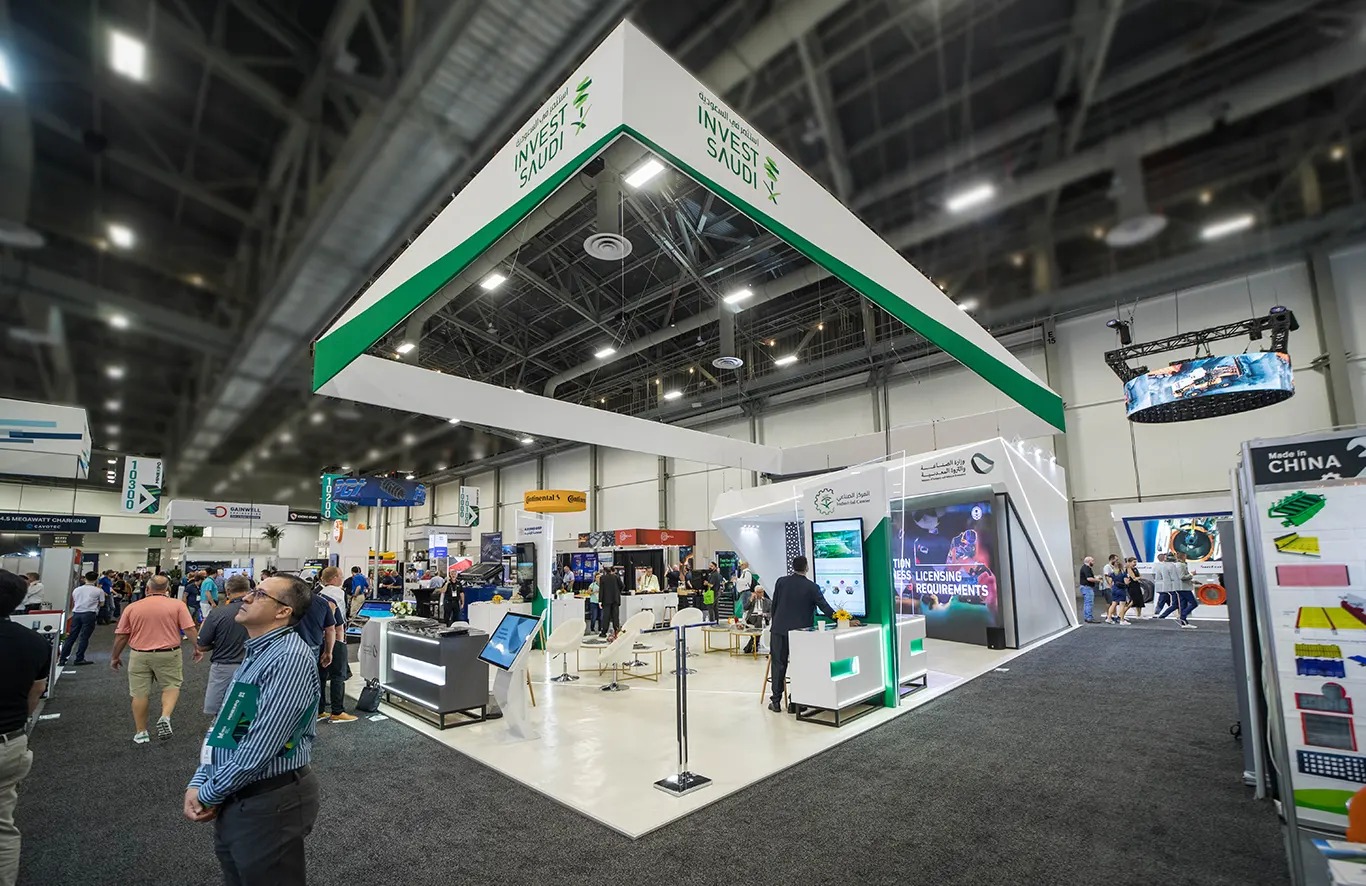
Venue Selection Strategies for Aerospace and Defense Trade Shows
Selecting the right venue in the Dallas-Fort Worth region is foundational for aerospace and defense exhibitors aiming to accommodate elaborate setups such as full-scale drone assemblies or holographic satellite orbit demonstrations. The Kay Bailey Hutchison Convention Center Dallas stands out with its vast exhibit space, where exhibitors can reference detailed guidelines on what to expect, including preparation for high-volume attendee traffic typical of defense sector gatherings. This facility's infrastructure supports the heavy loads and specialized rigging required for turbine engine displays or armored plating sections, making it a primary choice for flagship events in the industry.
Dallas Market Hall provides an alternative for more targeted expositions, such as those focusing on aerospace supply chain components or defense electronics, with its dedicated exhibition layout that facilitates efficient visitor flow around interactive kiosks and component breakdowns. Similarly, the Fashion Industry Gallery offers unique configurations for boutique-style showcases of precision instruments or lightweight composite materials, allowing exhibitors to create immersive environments without the scale constraints of larger halls. Each venue's distinct characteristics necessitate tailored booth planning to optimize sightlines and accessibility for key decision-makers.
Coordinators should evaluate proximity to auxiliary spaces like the Omni Dallas Hotel or Hyatt Regency Dallas for hybrid events combining trade show floors with private briefings on classified-adjacent technologies. This multi-venue approach ensures comprehensive coverage, from public unveilings at convention centers to secure discussions in connected hospitality settings, all while adhering to exhibitor protocols that govern setup and teardown.
Logistics and Docking Coordination Essentials
Efficient logistics form the backbone of aerospace and defense expo execution in DFW venues, where timely access to loading docks prevents bottlenecks for shipments of voluminous cargo like wing sections or radar domes. At the Kay Bailey Hutchison Convention Center Dallas, exhibitors must follow precise docking procedures outlined in official resources, scheduling arrivals to match designated windows that accommodate tractor-trailers and flatbeds carrying mission-critical hardware. This structured approach minimizes cross-traffic with other industries, ensuring that defense contractors can offload palletized munitions simulators without interference.
Planning extends to on-site material handling, where booth coordinators orchestrate the movement from docks to exhibit halls, accounting for the weight distribution of fuselage prototypes or engine nacelles. Venues like Dallas Market Hall streamline this process with clear pathways from entry points to display zones, facilitating the positioning of heavy exhibits that require crane assistance or specialized forklifts compliant with facility rules. Advance freight manifests help align these operations, reducing dwell times and enabling focus on final assembly.
For events spanning multiple days, reverse logistics planning is equally critical, coordinating dismantle sequences to clear spaces promptly while protecting delicate instrumentation like gyroscopes or encrypted communication devices during extraction.
Utility and Power Management for Technical Demonstrations
Aerospace and defense booths often rely on substantial electrical and data utilities to power live demonstrations of flight control systems or ballistic modeling software, making advance ordering imperative at DFW venues. The Kay Bailey Hutchison Convention Center Dallas provides comprehensive exhibitor utilities information, detailing amperage options from standard 20-amp circuits to high-voltage three-phase feeds essential for operating wind tunnel replicas or electromagnetic pulse simulators. Coordinators must calculate total draw based on concurrent activations, preventing overloads during peak demo hours.
Integration of fiber optic lines and internet bandwidth supports real-time telemetry displays or VR simulations of orbital maneuvers, with venue specifications guiding the placement of junction boxes to avoid interference with neighboring exhibits. In facilities like Omni Dallas Hotel, hybrid setups blend convention power with in-house AV capabilities, ideal for defense briefings featuring secure video links. This layered utility strategy ensures uninterrupted performance, critical for captivating audiences with cutting-edge aerospace advancements.
Monitoring and contingency planning, including backup generators for mission-critical demos, rounds out the approach, aligning with venue protocols to maintain safety and reliability throughout the event.
Service Partner Integration and Compliance
Leveraging approved service partners is a cornerstone of compliant exhibit execution at Dallas venues, particularly for aerospace and defense setups involving complex rigging and electrical work. The Kay Bailey Hutchison Convention Center Dallas maintains a directory of vetted providers experienced in handling the intricacies of suspending helicopter rotor blades or installing vibration platforms for engine tests, ensuring all labor meets facility standards and insurance requirements. Coordinators facilitate introductions and contracts well in advance, clarifying scopes for I&D services tailored to defense-grade hardware.
This partnership model extends to audiovisual specialists configuring immersive C4ISR command center replicas or lighting experts illuminating composite material stress tests, all while navigating venue-specific rules on access times and work authorizations. Dallas Market Hall's operational framework similarly emphasizes pre-approved collaborators for efficient booth turns, allowing exhibitors to focus on content delivery rather than administrative hurdles.
Ongoing communication with partners throughout the planning cycle mitigates risks, from permit acquisitions for pyrotechnic jet exhaust effects to final inspections confirming structural integrity post-installation.
Exhibit Design Adaptations for DFW Venue Configurations
Designing aerospace and defense exhibits requires adaptability to the architectural nuances of DFW venues, such as the column spacing in Kay Bailey Hutchison Convention Center Dallas halls that influences island booth layouts for panoramic views of spacecraft interiors. Coordinators prioritize scalable frameworks using tension fabric systems or truss grids that conform to ceiling heights and aisle setbacks, enabling fluid reconfiguration between venues like Dallas Market Hall's open-floor plans and Fashion Industry Gallery's contoured spaces.
Visual storytelling elements, from backlit schematics of hypersonic vehicles to touchscreens detailing stealth coatings, must integrate smoothly with venue lighting and HVAC flows to maintain demo fidelity. This venue-responsive design philosophy also addresses fire safety ratings for materials used in simulating composite fuselage failures or armor penetration tests, ensuring regulatory harmony without compromising impact.
Post-design simulations using venue floorplans validate traffic patterns, optimizing high-engagement zones for interactions with procurement teams evaluating next-gen propulsion or surveillance platforms.
Installation, Operation, and Dismantle Timelines
Tight timelines govern the lifecycle of aerospace and defense exhibits in Dallas venues, with installation windows at Kay Bailey Hutchison Convention Center Dallas commencing after general contractor move-in and concluding before public hours. Coordinators sequence tasks meticulously—erecting skeletal frames for aircraft fuselages first, followed by cladding and electronics—to hit soft-open milestones, allowing for tweaks to interactive missile guidance consoles based on final lighting conditions.
Operational phases demand vigilant monitoring of utility performance and structural stability amid thousands of footsteps from engineers scrutinizing payload bay mockups. Dismantle follows a reverse choreography, prioritizing disconnection of power-hungry radar arrays before de-rigging overhead elements, all synced to dock re-access slots to expedite outbound shipments of reusable components like satellite dish arrays.
This phased mastery minimizes downtime, positioning exhibitors for repeat success across DFW's venue ecosystem.
Multi-Venue Event Strategies Across Dallas-Fort Worth
Aerospace and defense portfolios often span multiple DFW venues, requiring orchestrated strategies that unify branding from Kay Bailey Hutchison Convention Center Dallas main stages to satellite activations at Irving Convention Center at Las Colinas or Gaylord Texan Resort & Convention Center. Coordinators develop master timelines bridging logistics across clusters, standardizing booth footprints while customizing for site-specific load-in paths and utility grids.
This expansive approach captures overflow attendance, directing traffic from core expositions at Dallas Market Hall to hospitality extensions at Hyatt Regency Dallas for deep-dive sessions on quantum sensors or directed energy weapons. Shared service partner networks streamline cross-venue compliance, from uniform freight labeling to consolidated billing for AV across properties.
Holistic oversight ensures narrative continuity, amplifying ROI through interconnected experiences tailored to the region's venue diversity.
Questions buyers ask first
What venue features support large aerospace displays in Dallas?
The Kay Bailey Hutchison Convention Center Dallas offers extensive exhibit space with detailed exhibitor guidelines, including docks for heavy equipment and high-capacity utilities suitable for powering large-scale models and simulations.
How do docking procedures work for defense exhibit freight?
At venues like Kay Bailey Hutchison Convention Center Dallas, exhibitors schedule dock access in advance via official procedures, accommodating trailers with oversized items like airframe sections through designated loading zones.
What utilities are available for technical defense demos?
Facilities such as Kay Bailey Hutchison Convention Center Dallas provide options from basic circuits to three-phase power and data lines, as outlined in their utilities resources, ideal for radar and avionics demonstrations.
How to select service partners for these events?
Refer to venue directories like that of Kay Bailey Hutchison Convention Center Dallas for approved providers handling rigging, electrical, and AV needs specific to aerospace and defense setups.
Can exhibits span multiple DFW venues?
Yes, strategies integrate core halls like Dallas Market Hall with hotels such as Omni Dallas Hotel, coordinating logistics and timelines across Dallas-Fort Worth clusters.
What planning steps ensure smooth installation?
Follow venue exhibitor protocols, including advance freight planning, partner coordination, and sequenced assembly to meet tight I&D windows without disruptions.
Related topics
Continue with the Dallas topics closest to the current scope.
Start here
Expo Stand Builders of Dallas
Full-service exhibit programs with design, fabrication, logistics, venue-aware planning, and show-floor accountability across Dallas-Fort Worth. Share the venue, dates, footprint, and the part of the scope that still needs to be solved.