
Locations / Trade Show Exhibit Planning for Carrollton, TX in the DFW Market
Trade Show Exhibit Planning for Carrollton, TX in the DFW Market
Authoritative coordination resources for Carrollton organizations navigating custom exhibits, venue requirements, and strategic participation across distinct Dallas-Fort Worth event clusters.
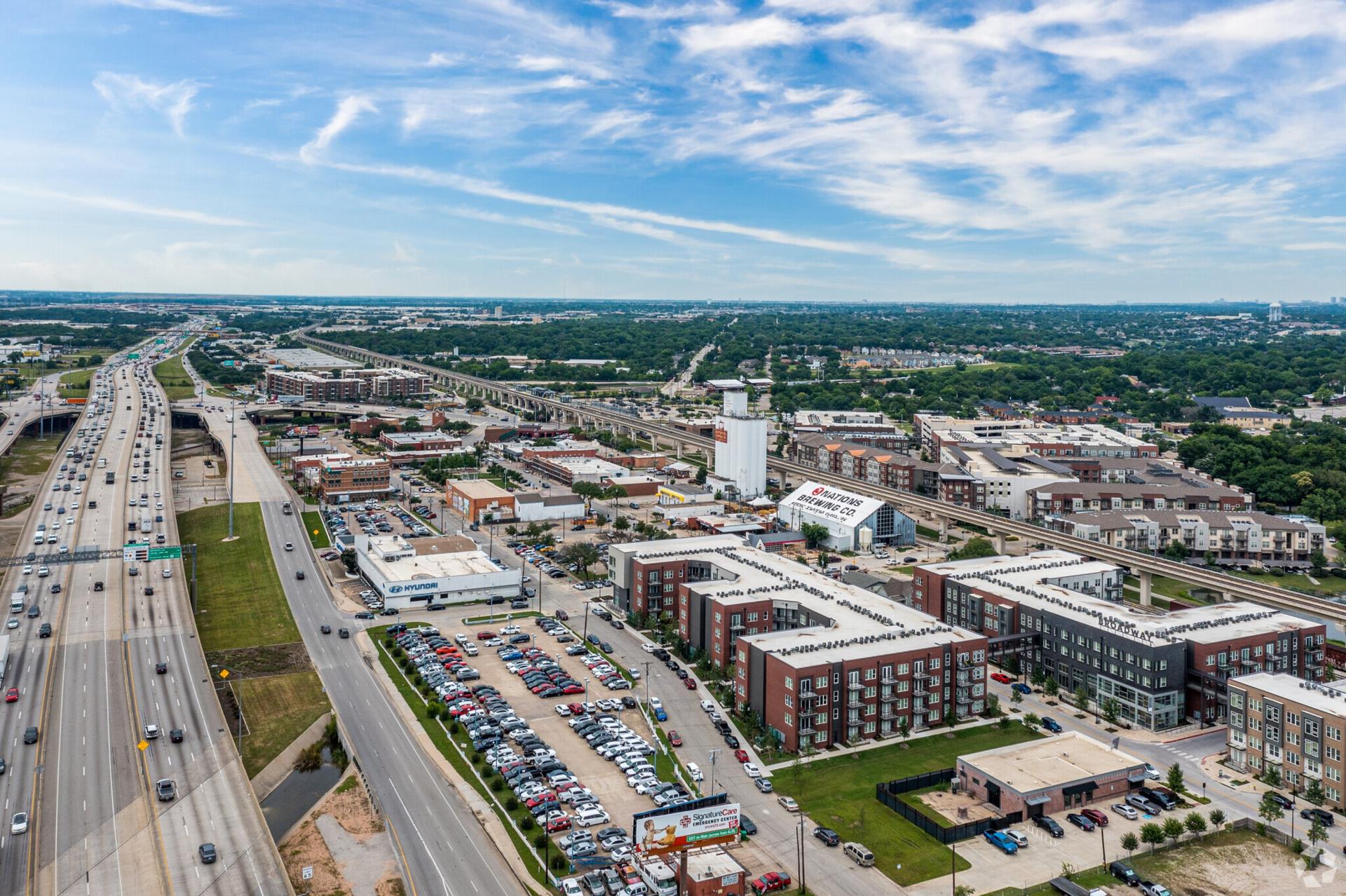
Carrollton's Position Among DFW Suburban and Corporate Nodes
Carrollton is catalogued as one of thirty-five nearby municipalities that collectively cover the primary DFW venue corridors, airport approaches, suburban corporate nodes, and secondary locations capable of supporting exhibit, conference, activation, and Install and Dismantle activity. This designation underscores its practical role for organizations that maintain headquarters or operations in the northern Dallas County area while targeting events distributed across the metroplex. Rather than functioning as an isolated market, Carrollton connects efficiently to the larger network of convention centers, market halls, and specialized venues that drive regional demand.
The surrounding suburban context allows for considered evaluation of which exhibitions best match corporate priorities without the overhead of long-distance coordination. Recommended location lists consistently position Carrollton alongside Allen, Bedford, Coppell, Farmers Branch, Lewisville, and similar communities, each contributing to the distributed infrastructure that sustains year-round event activity. This distributed model rewards planners who map their Carrollton base to the specific characteristics of target clusters instead of defaulting to generic strategies.
By maintaining awareness of how Carrollton fits into the wider DFW framework, organizations avoid mismatched venue selections and develop repeatable processes that scale across multiple participations. The approach treats each event opportunity according to its operational environment, whether centered on the comprehensive resources of the Kay Bailey Hutchison Convention Center or the more focused environments outlined in planning materials for neighboring cities.
Distinct Operational Contexts Across DFW Venue Clusters
The Dallas-Fort Worth region comprises separate venue clusters, each presenting unique planning demands that Carrollton organizations must address individually. Downtown Dallas, led by the Kay Bailey Hutchison Convention Center, features extensive exhibitor documentation that details everything from initial expectations through final move-out. These official pages address service partners, utilities requirements, and dock operations, forming an essential reference set for any team preparing materials for transport from Carrollton.
Irving maintains its own planning guide for 2025 that emphasizes coordinated approaches to event hosting and execution within its specific hospitality and airport-adjacent environment. Arlington concentrates on meetings and conventions that frequently intersect with the area's entertainment infrastructure, creating different logistical and audience considerations. Frisco has developed a curated selection of venues suited for corporate gatherings and association events, each with distinct spatial and technical attributes documented on its official meetings site.
Grapevine, Addison, Plano, and other listed locations further diversify the available options, requiring tailored preparation rather than standardized tactics. Carrollton planners gain advantage by studying these differences early, ensuring that booth configurations, material handling plans, and staffing models reflect the realities of the chosen cluster. This nuanced differentiation prevents common oversights and supports more effective allocation of resources across the regional calendar.
Custom Exhibit Design Strategies Suited to DFW Audiences
Design for DFW exhibitions must balance visual impact with the practical constraints of busy convention schedules and diverse facility layouts. Carrollton organizations benefit from concepts that emphasize clear messaging, durable construction, and flexible configurations capable of adapting to the varying scales found across downtown Dallas, Irving, and northern suburban venues. The competitive environment at major shows rewards booths that facilitate rapid audience comprehension while supporting interactive demonstrations aligned with North Texas industry sectors.
Materials and finishes should be selected according to the character of the target cluster. Facilities such as the Kay Bailey Hutchison Convention Center and Dallas Market Hall host events where both premium aesthetics and functional robustness prove important, while the Fashion Industry Gallery and Omni Dallas Hotel environments may call for refined detailing that matches their upscale positioning. Modular systems offer particular value for Carrollton teams that participate in multiple events, enabling component reuse and reducing cumulative costs over time.
Graphics, lighting, and technology integrations require advance testing to ensure compatibility with venue utility specifications and to avoid on-site complications. Effective designs also incorporate storage and workflow considerations that allow exhibit staff to focus on engagement rather than logistical management. When developed with awareness of the distinct operational tempos of DFW clusters, these custom solutions consistently deliver stronger connection with regional audiences.
Logistics Coordination and Venue Protocol Awareness
Material movement from Carrollton to DFW venues requires alignment with published procedures at each facility. The Kay Bailey Hutchison Convention Center maintains specific documentation on dock operations that governs inbound and outbound shipping, establishing windows and requirements that must be factored into scheduling. Similar attention to utility ordering and service partner assignments helps maintain compliance and prevents disruptions during critical setup periods.
Regional sources confirm that advance coordination with listed service partners streamlines handling of electrical, networking, rigging, and related needs at major convention facilities. Carrollton planners achieve better predictability by building these requirements into initial timelines rather than treating them as afterthoughts. The proximity of Carrollton to primary transportation arteries supports timely arrivals, yet this advantage is fully realized only when paired with precise adherence to each venue's published protocols.
Contingency planning for variables such as peak-season volume at Dallas Market Hall or specialized requirements at venues referenced in the Irving and Frisco materials further strengthens execution. Comprehensive logistics coordination extends beyond transportation to encompass pre-event inspections, on-site supervision strategies, and orderly dismantling processes that protect both assets and budgets. When grounded in official venue information, these practices reduce friction and allow exhibitors to maintain focus on their core business objectives.
Timeline Development and Budgeting Frameworks
Effective planning for DFW events typically begins six to twelve months prior to major exhibitions at facilities like the Kay Bailey Hutchison Convention Center, providing adequate windows for concept refinement, custom fabrication, graphic production, and rehearsal. Carrollton organizations that establish these extended timelines gain flexibility to incorporate feedback and adjust to evolving show specifications. Shorter cycles may apply to smaller activations or rental-based programs, yet core events in the regional calendar reward deliberate preparation.
Budget structures should allocate resources across design, production, transportation, service partner fees, staffing, technology, and post-event follow-up. Official resources from Dallas, Irving, Arlington, and Frisco illustrate how venue characteristics influence these allocations, with larger convention centers often requiring more substantial investment in material handling and utilities while specialized venues may emphasize experiential elements. Tracking these categories against historical performance data from prior DFW participations helps refine future estimates.
Integrating measurement criteria at the budgeting stage ensures that exhibit investments are tied to concrete outcomes such as qualified leads, brand impressions, or partnership development. Carrollton teams that apply this discipline across multiple clusters develop institutional knowledge that compounds over time, transforming trade show activity from isolated expense into a scalable component of regional market strategy.
Engagement Tactics and Post-Event Measurement
DFW audiences expect professional, efficient interactions that respect their time and deliver clear value. Booth staffing models, demonstration schedules, and data capture methods should be calibrated to the specific environment of the chosen cluster, whether a high-traffic convention floor at the Kay Bailey Hutchison Convention Center or a more intimate setting at the Fashion Industry Gallery or venues catalogued in the Frisco directory. Training that incorporates these nuances improves conversion rates and attendee satisfaction.
Post-event processes represent an essential extension of the initial planning investment. Structured debriefs, lead distribution protocols, and performance reviews against predefined metrics allow Carrollton organizations to extract maximum insight from each participation. Documentation of what succeeded at different venue types, such as those in Arlington versus Irving or downtown Dallas, builds a knowledge base that informs subsequent selections and design iterations.
Long-term success in the DFW market stems from treating exhibitions as part of a coordinated continuum rather than discrete events. By maintaining consistent attention to official resources, differentiating cluster requirements, and refining approaches based on measured results, Carrollton-based exhibitors establish repeatable advantages in one of the nation's most active regional events landscapes.
Selecting and Preparing for the Right DFW Opportunities
The regional calendar distributes events across multiple clusters, requiring Carrollton planners to match corporate goals with appropriate venues and audiences. Resources such as the Arlington meetings and conventions portal, the Irving Event Planning Guide, and the Visit Frisco venues overview provide foundational information for identifying suitable exhibitions. Factors including audience profile, competitive density, show duration, and logistical feasibility from Carrollton should all inform selection decisions.
Once an event is chosen, preparation shifts to detailed review of that venue's specific materials. For the Kay Bailey Hutchison Convention Center this includes thorough examination of exhibitor guides, service partner lists, utility specifications, and dock schedules. Comparable attention to requirements at Dallas Market Hall or other facilities referenced in regional directories prevents misalignment and supports smooth execution.
A strategic rotation of events across different clusters and seasons allows Carrollton organizations to build cumulative presence in the North Texas market. This coordinated perspective, grounded in official sources and operational nuance, transforms participation from tactical activity into a sustainable element of broader business development.
Questions buyers ask first
Why is Carrollton included in DFW exhibition planning resources?
Carrollton is listed among recommended locations that support show, conference, activation, and Install and Dismantle demand across the primary venue corridors, suburban nodes, and secondary municipalities of the Dallas-Fort Worth metroplex.
What official resources should Carrollton exhibitors consult first?
Begin with Kay Bailey Hutchison Convention Center materials on exhibitor expectations, service partners, utilities, and docks, then cross-reference planning guides for Irving, Arlington meetings, and Frisco venues.
How should budgets account for multiple DFW venue types?
Allocate according to the specific demands of each cluster, incorporating documented requirements for material handling, utilities, service partners, and experiential elements that vary between convention centers and specialized venues.
What role do service partners play at DFW facilities?
Listed service partners for venues including the Kay Bailey Hutchison Convention Center manage electrical, rigging, internet, and handling functions according to each facility's established standards and procedures.
Related topics
Continue with the Dallas topics closest to the current scope.
Start here
Expo Stand Builders of Dallas
Full-service exhibit programs with design, fabrication, logistics, venue-aware planning, and show-floor accountability across Dallas-Fort Worth. Share the venue, dates, footprint, and the part of the scope that still needs to be solved.